
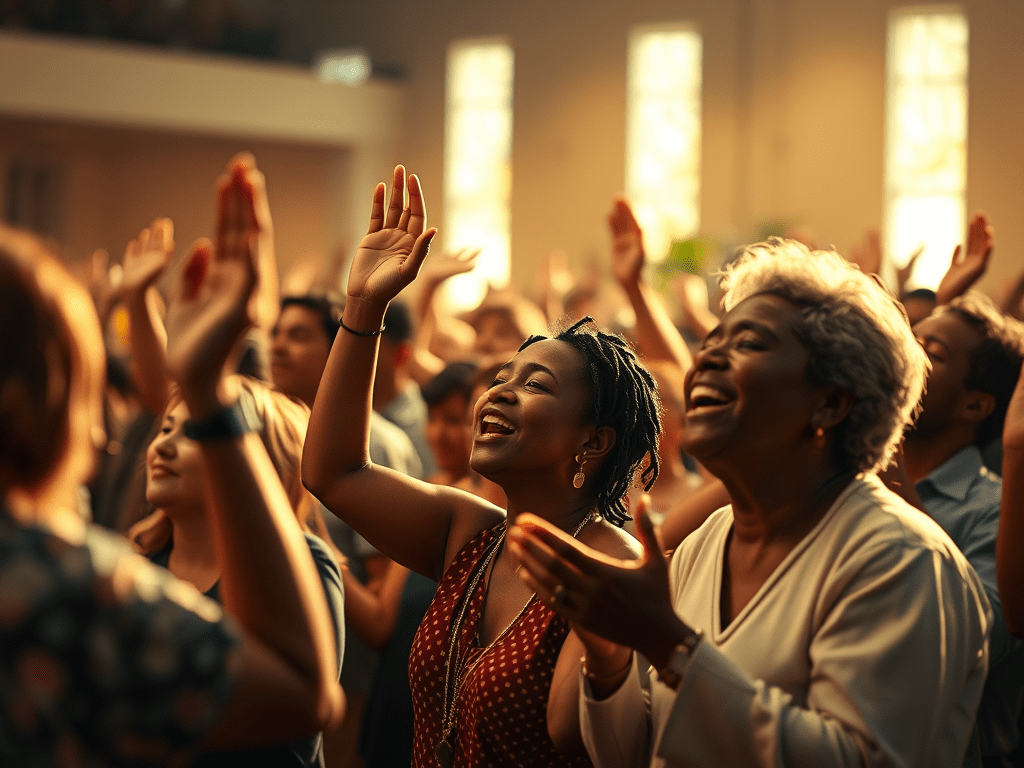
The end. The crescendo of a song. A doxology of theological confession. All of this and much more is found at the conclusion of this psalm.
This todah or thanksgiving psalm was a formal song used in congregational worship for God’s covenant people, Israel. It is the remembrance of God’s blessings communicated through song, a moral act of covenantal fidelity and renewal.
David began with a personal blessing of God for all His benefits. But what began as an individual song of praise moved to the call of a people to worship, and now as the song comes to its climax, there’s a broadening of this call for praise. The Psalmist now calls, even commands, all created things to worship their Creator – it is a cosmic symphony of thanksgiving.
As I close this series of articles, there are two things that I want us to observe.
The Reason for Worship
David reveals to us the supreme reason we worship – He is the sovereign Lord. The God of creation, visible and invisible, has established His throne. Throne is often used as a symbol of authority. The Lord’s throne – His authority is established in the heavens which conveys to us that He is above all. Next, David tells us of the expanse of the Lord’s kingdom – He rules over all.
Why should God be blessed and worshiped? The simple answer is He is worthy of it and it is due to Him because of who He is, the Sovereign God. Blessing and worship are the natural responses of created subjects, but much more, it should be the response of a redeemed creature that has been created in His image. The song of the redemption of God’s people in Christ is the worship that will be offered to God for eternity. We see this in the New Testament, as well. A Greek word that conveys the same thought of the Hebrew word “bless” is used of Jesus in Matthew 26:27, and Paul uses the same word in 1 Corinthians 11:24; it is the word eucharistesas meaning thanksgiving, gratitude, or blessing and is translated “..given thanks”. It is from this word we get ‘Eucharist’. Most often, in Protestant churches, the terms Lord’s Supper or Communion are used. When the church comes to the Lord’s table in communion to commemorate Christ’s death, it is to be done as a celebration of gratitude, thanksgiving, and joy for the gift of salvation offered through the gospel.
Thanksgiving is the worship of the redeemed.
The Response of Worship
How should worship be demonstrated and practiced in our lives? Well, the answer can be found in our text as we examine the other created beings mentioned in the remaining verses – the angels, hosts, and works.
The angels are the mighty ones who obey and do His word. (Note: The strength of the mighty ones is not autonomous but is derived from the One who sits upon the throne of an everlasting kingdom.) The hosts are His ministers that do His will. And His works are all other created things.
What we learn from these is that, whether sung or spoken, they proclaim God’s word. Therefore, let the redeemed of the Lord say so in the proclamation of the gospel. We see as an example that the hosts and all created things fulfill the purpose of their existence by doing His will. Worship is not merely a song but a life lived for the glory of the One who created and redeemed us. David in another psalm said it this way – “Ascribe to the LORD, O heavenly beings, ascribe to the LORD glory and strength. Ascribe to the LORD the glory due his name; worship the LORD in the splendor of holiness.” Psalm 29:1-2. To worship the Lord in the splendor of holiness is to worship through a life sanctified and separated for His use. Believer, your life is worship. It is more than a song; it is a life lived for Christ and the gospel.
Thanksgiving isn’t a private sentiment; it’s a shared act of worship. I invite you to join this cosmic choir to the One who is worthy of all worship.
Concluding Thought
The relationship between Christ and the believer is not merely a contractual agreement (like a prenuptial) nor is it a cultural construct (meaning that the definition and identity of what a Christian is not shaped by societal or cultural ideology, traditions, or assumption- its defined by Scripture). It is a covenant bound by the shedding of blood, sealed by the Spirit, and guaranteed by the resurrection of Christ. May this everlasting covenant be renewed in our minds and hearts day-by-day by our lives, as well as, every Lord’s day as we gather for corporate worship.
 goapologetics
Leave a comment